

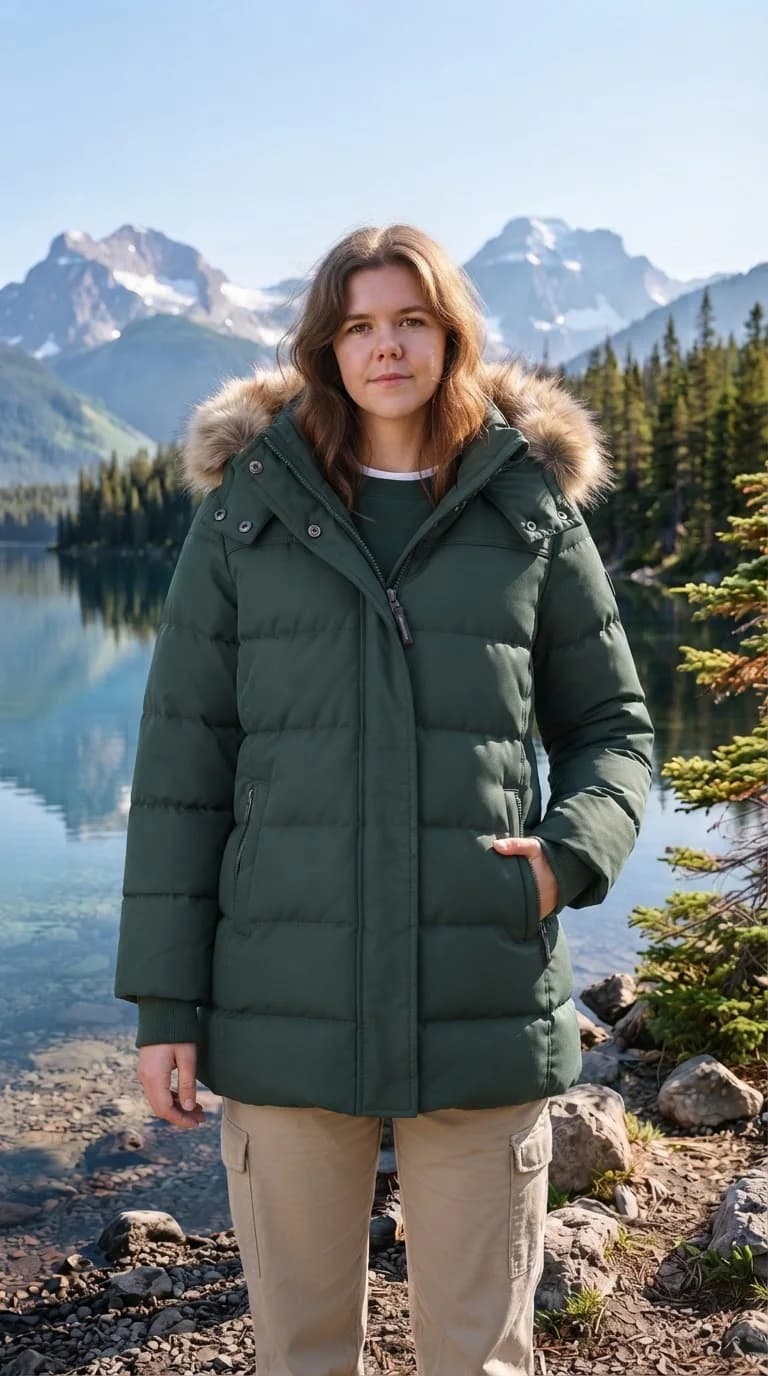
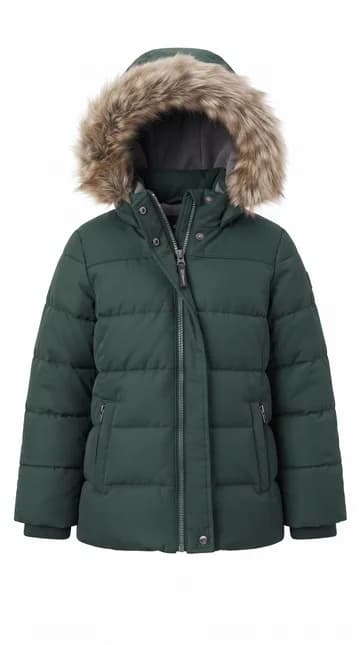
Winter jacket — After
Winter jacket
Try it for free1. The Thermal Science: Down Fill Power vs Advanced Synthetics
Selecting a winter coat is one of the most critical functional apparel decisions you make. A poor choice results in shivering through bitter commutes or overheating during indoor transit. The core engine of any cold-weather coat is its thermal insulation matrix.
Natural Goose or Duck Down remains the undisputed champion of warmth-to-weight efficiency. The metric that defines down quality is Fill Power—the volume in cubic inches that one ounce of down occupies under laboratory testing. Commercial coats range from 550 to 900 fill power. A 750+ fill power down jacket traps millions of microscopic air pockets with featherweight lightness, keeping you toasty down to -25°C without weighing down your shoulders.
However, down's Achilles heel is moisture: when soaked by rain or wet snow, down feathers collapse into a soggy lump, losing 90% of their insulating capacity. This is where advanced synthetics (such as PrimaLoft Gold and Thinsulate) excel. Engineered from micro-denier polyester fibers that mimic down cluster geometry, synthetic fills maintain 95% of their thermal resistance even when damp and dry three times faster.
For dry, freezing continental winters, high-loft down reigns supreme; for slushy, rainy maritime urban winters, synthetic insulation or hybrid baffles offer superior reliability.
2. Tailored Wool Overcoats vs Technical Arctic Parkas
Balancing formal aesthetic elegance against extreme weather defense requires understanding two distinct outerwear archetypes.
The Tailored Wool Overcoat (The Urban Executive): Constructed from heavy melton wool, cashmere blends, or double-faced twill (typically 500 to 750 GSM), the wool overcoat provides structured sophistication. It layers seamlessly over business suits and formal eveningwear, projecting timeless authority. Wool naturally repels light drizzle and resists wind, but lacks the extreme sub-zero thermal baffles needed for prolonged blizzard exposure.
The Technical Arctic Parka (The Weatherproof Shield): Built around a rugged DWR-coated (Durable Water Repellent) ripstop nylon shell, sealed storm flaps, and a fleece-lined snorkel hood, the parka is engineered for survival against biting winds and sub-zero temperatures. Features like internal storm cuffs and drawcord waist gaskets seal out drafts completely.
A well-rounded winter wardrobe ideally incorporates both: a sharp wool overcoat for work and fine dining, and a technical parka for weekend travel and heavy snow days.
- Wool Overcoat: 500-750 GSM wool/cashmere, structured shoulders, knee length, executive elegance.
- Technical Parka: Waterproof shell, 700+ fill power, snorkel hood, storm cuffs, sub-zero protection.
- Puffer Down Jacket: Casual quilted comfort, high packability, lightweight everyday mobility.
- Shearling Coat: Heavy sheepskin hide, rustic luxury, natural windproof insulation.
3. The Layering Clearance Rule: Avoiding the Marshmallow Trap
The most frequent sizing blunder when buying winter coats is trying the garment on over a simple summer t-shirt in an air-conditioned store. When winter arrives and you attempt to wear the coat over a chunky cable-knit sweater or structured suit jacket, you discover you cannot cross your arms or button the collar without choking.
Adhere to the Layering Clearance Rule: a proper winter coat must incorporate 6 to 8 centimeters of chest circumference ease beyond your bare chest measurement, and generous armhole drop (scye depth).
Test mobility by extending your arms straight forward as if driving a car. If the fabric pulls tight across your shoulder blades or lifts the coat hem more than 5 centimeters, size up. At the same time, avoid excessively oversized parkas that create an unflattering 'marshmallow' silhouette that swallows your frame.
Look for internal waist drawcords: they allow you to cinch the midsection from the inside, restoring flattering silhouette definition while preventing cold air from rushing up your spine.
4. Critical Hardware Details: Zippers, Hoods, and Storm Flaps
The longevity of heavy outerwear is measured by its mechanical hardware. In sub-zero temperatures, cheap plastic zippers become brittle and teeth snap, rendering an expensive coat useless.
Look for heavy-gauge two-way YKK or Riri metal zippers with fabric pull tabs. A two-way zipper allows you to unzip the bottom hem when sitting in a car or subway train, preventing the zipper from bursting under pelvic pressure.
Examine storm flaps: the front zipper should be shielded by an exterior magnetic or snap-button storm placket that blocks freezing wind from penetrating the zipper teeth.
Hood construction is equally vital: a deep 'snorkel' hood that extends beyond the face protects cheekbones from frostbite. Faux-fur or shearling hood ruffs disrupt laminar wind flow across the face, trapping a pocket of warm, still air around your nose and eyes.
5. Testing Winter Outerwear with VirtuStyle AI Before Buying
Use VirtuStyle AI to explore short and long outerwear styles on your own photo. Upload a person photo and a clear garment image, then compare the generated appearance with the original product.
Treat the result as an illustration of a possible look. The model may change construction details, patterns or proportions; it does not calculate verified body dimensions or simulate material physics.
Check the retailer’s measurements and fabric description separately. A generated image cannot establish comfort, support, warmth, stretch or how the item behaves while moving.
If a detail is unclear, try a clearer source image and compare again. Keep the original product page for checking measurements and return conditions before ordering.
Frequently asked questions
What is the warmest winter coat length?→
Knee-length or mid-calf coats are significantly warmer than hip-length jackets because they trap body heat around the femoral arteries in the thighs, preventing overall body core heat loss.
How do I clean and wash a down winter parka?→
Wash down jackets only when necessary using specialized down detergent on a gentle cycle. Tumble dry on low heat with 3-4 clean tennis balls to break up down clumps and restore loft.
Can I test how a coat looks over a suit with VirtuStyle AI?→
You can explore short and long outerwear styles as a visual preview. Generated details and colours can differ from the actual garment. This tool cannot verify measurements, tightness, support or comfort; check those with the seller.
What down fill power is needed for -20°C temperatures?→
For sub-zero climates (-15°C to -25°C), look for a minimum of 700 to 800 fill power down with at least 250 grams of down fill weight and a windproof membrane shell.
What to remember
Winter Coat & Parka Buying Guide. Use the practical checks above to shortlist options, then verify size, materials and comfort with the seller. A virtual preview can help you compare appearance, but cannot guarantee fit or replace a physical fitting.