1. The 2026 Bridal Paradigm: Architectural Drama Meets Modern Ease
Bridal fashion in 2026 marks a decisive break from the unstructured, diaphanous boho-chic aesthetic that dominated the preceding decade. Today's brides are demanding sharp tailoring, historical corsetry references, and sculptural forms that project poise and presence. At the same time, ceremonies are increasingly experiential, requiring gowns that permit genuine mobility, uninhibited dancing, and prolonged comfort.
The defining silhouette of 2026 is unmistakably the basque waist—a pointed V-shaped bodice inspired by 17th-century European court fashion that dips gracefully below the natural waistline. By anchoring structural boning across the lower ribcage and elongating the torso, the basque waist creates an extraordinarily flattering optical slimming effect that complements both slender athletic frames and fuller hourglass figures.
Complementing this structural renaissance is a renewed appreciation for matte luxury textiles. Glossy synthetic polyesters have been superseded by heavy silk mikado, double-faced wool crepe, and sculpted duchess satin. These heavyweight fabrics possess the tensile rigidity needed to sustain architectural pleating without collapsing under outdoor humidity or ceremony spotlights.
Brides no longer wish to feel enveloped in fragile lace; they seek gowns that feel like modern armor—clean, confident, and sculpted to perfection.
2. Fabric Innovations: 3D Organza Florals and Weightless Architectural Mikado
While silhouette provides the skeleton of a wedding gown, fabric choice dictates its emotional resonance and physical behavior. In 2026, material innovation centers on dimensional tactile experiences. Flat chemical laces have yielded to hand-cut 3D silk organza appliques that flutter organically with the bride's stride.
Silk mikado remains the uncontested favorite of European couture houses. Unlike conventional silk satin, mikado is woven with multiple yarn densities, yielding a subtle diagonal grain that refracts light with a low-sheen pearlescent glow rather than a harsh glare. This property makes it exceptionally photogenic across both digital photography and natural sunlight.
For destination and summer celebrations, fluid matte crepes and liquid silk charmeuse offer second-skin drape. These bias-cut fabrics celebrate the body's natural contours, falling straight without rigid hoop skirts or excessive tulle petticoats.
Another rising trend is textured jacquard featuring tone-on-tone botanical relief patterns, lending historic opulence without the weight of heavy crystal beading.
- Silk Mikado: Crisp, structural, matte pearlescent finish, perfect for cathedral trains.
- 3D Botanical Organza: Laser-cut petals and blossoms adding weightless dimension.
- Double-Faced Silk Crepe: Heavy drape, opaque coverage, and fluid movement.
- Sculpted Jacquard: Subtle woven relief patterns delivering understated old-world majesty.
3. The Rise of Modular Bridalwear: Ceremony to Afterparty in Seconds
Modern wedding festivities frequently span multiple settings—from solemn religious sanctuaries to breezy cocktail terraces and energetic midnight dance floors. Purchasing separate gowns for each segment is financially exorbitant and logistically cumbersome.
Enter the modular gown: the preeminent functional trend of 2026. Designers are engineering gowns with hidden magnetic fasteners, invisible interior hooks, and snap-off architectural elements. A bride enters the sanctuary in a majestic grand ballgown with cathedral-length mikado train and high-neck lace bolero.
Following the vows, the overskirt is detached in under sixty seconds to reveal a sleek, figure-skimming trumpet or column dress underneath. As the reception transitions into late-night dancing, detachable Juliet sleeves are removed, freeing the arms for celebration without requiring a complete wardrobe change.
This architectural adaptability maximizes value, allowing a bride to present two or three distinct aesthetics throughout her wedding day while retaining a cohesive design thread.
4. The Bridal Salon Dilemma: Why In-Store Samples Mislead
Traditional bridal shopping remains fraught with spatial and emotional disorientation. Bridal salons carry sample gowns typically produced in standard model sample sizes (US 8 to 12). For brides who fall outside these exact dimensions, salon consultants rely on metal binder clips and foam inserts clamped behind the spine to simulate fit.
This artificial pinning completely distorts the gown's true proportions. Clamping fabric at the back pulls side seams out of alignment, alters armhole depth, and falsely flattens the chest. Furthermore, salon lighting is deliberately warm and filtered, often masking how fabric translucency and undertones will appear under bright midday sunlight or flash photography.
Brides frequently commit non-refundable deposits exceeding $3,000 on gowns that look fundamentally different once ordered and delivered in their custom size months later, leading to heartbreaking alteration bills or last-minute panic.
Virtual fitting eliminates this deceptive friction by previewing the dress pattern directly mapped to your actual proportions in natural lighting.
5. Virtual Bridal Fittings: The Smart Bride's Competitive Edge
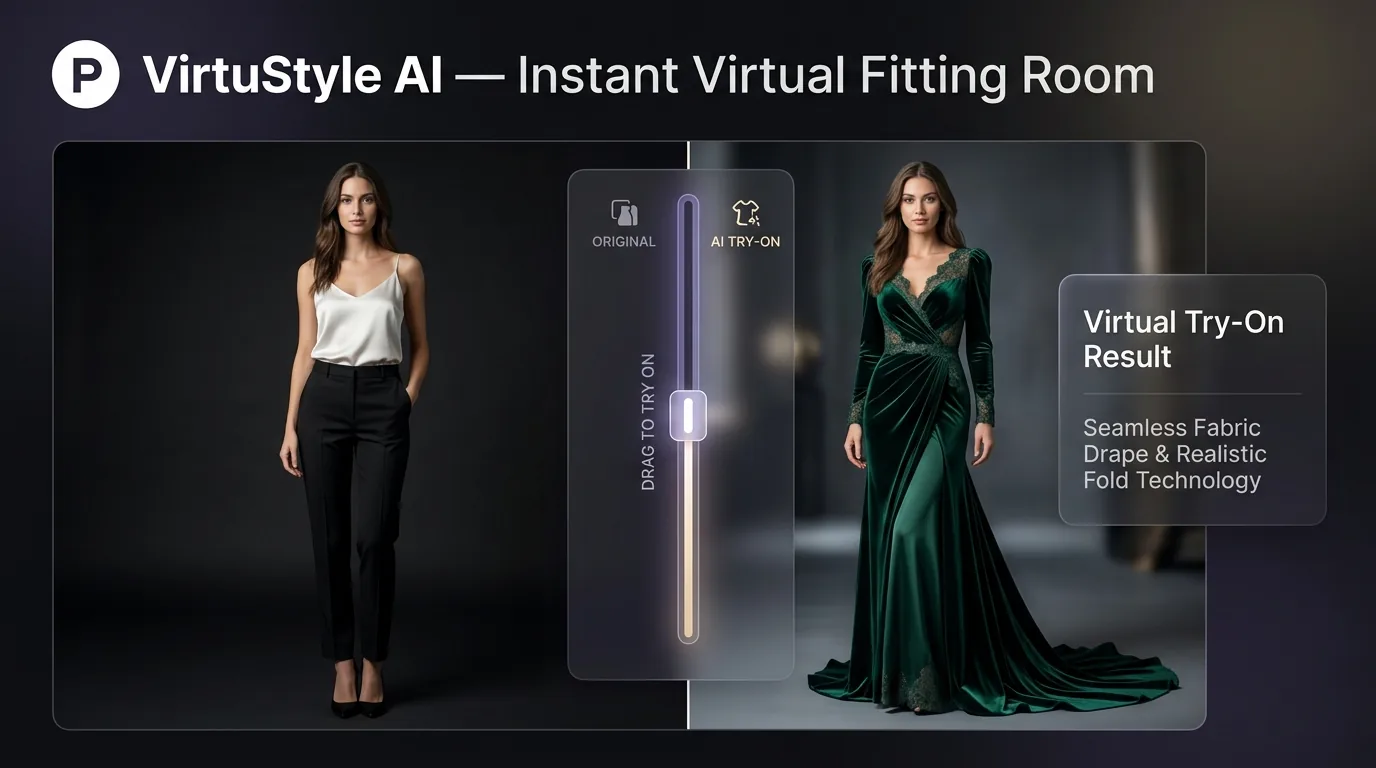
Use VirtuStyle AI to explore bridal silhouettes and necklines on your own photo. Upload a person photo and a clear garment image, then compare the generated appearance with the original product.
Treat the result as an illustration of a possible look. The model may change construction details, patterns or proportions; it does not calculate verified body dimensions or simulate material physics.
Check the retailer’s measurements and fabric description separately. A generated image cannot establish comfort, support, warmth, stretch or how the item behaves while moving.
If a detail is unclear, try a clearer source image and compare again. Keep the original product page for checking measurements and return conditions before ordering.
Frequently asked questions
Which wedding dress silhouette is most flattering for petite brides in 2026?→
Petite brides benefit tremendously from modified A-line silhouettes and basque-waist column gowns with vertical seam lines. Avoid voluminous ballgowns with heavy horizontal waistlines, which visually truncate vertical stature.
What is the difference between ivory and champagne wedding dress undertones?→
Ivory is a soft, warm white that flatters nearly all skin tones without the harsh blue cast of optical white. Champagne features subtle golden-beige undertones that look extraordinary on warm, olive, and deeper skin complexions.
Can I use VirtuStyle AI to see how a specific veil or sleeve style looks on me?→
You can explore bridal silhouettes and necklines as a visual preview. Generated details and colours can differ from the actual garment. This tool cannot verify measurements, tightness, support or comfort; check those with the seller.
How far in advance of my wedding should I start trying gowns virtually?→
You can explore bridal silhouettes and necklines as a visual preview. Generated details and colours can differ from the actual garment. This tool cannot verify measurements, tightness, support or comfort; check those with the seller.
What to remember
Wedding Dress Trends 2026. Use the practical checks above to shortlist options, then verify size, materials and comfort with the seller. A virtual preview can help you compare appearance, but cannot guarantee fit or replace a physical fitting.