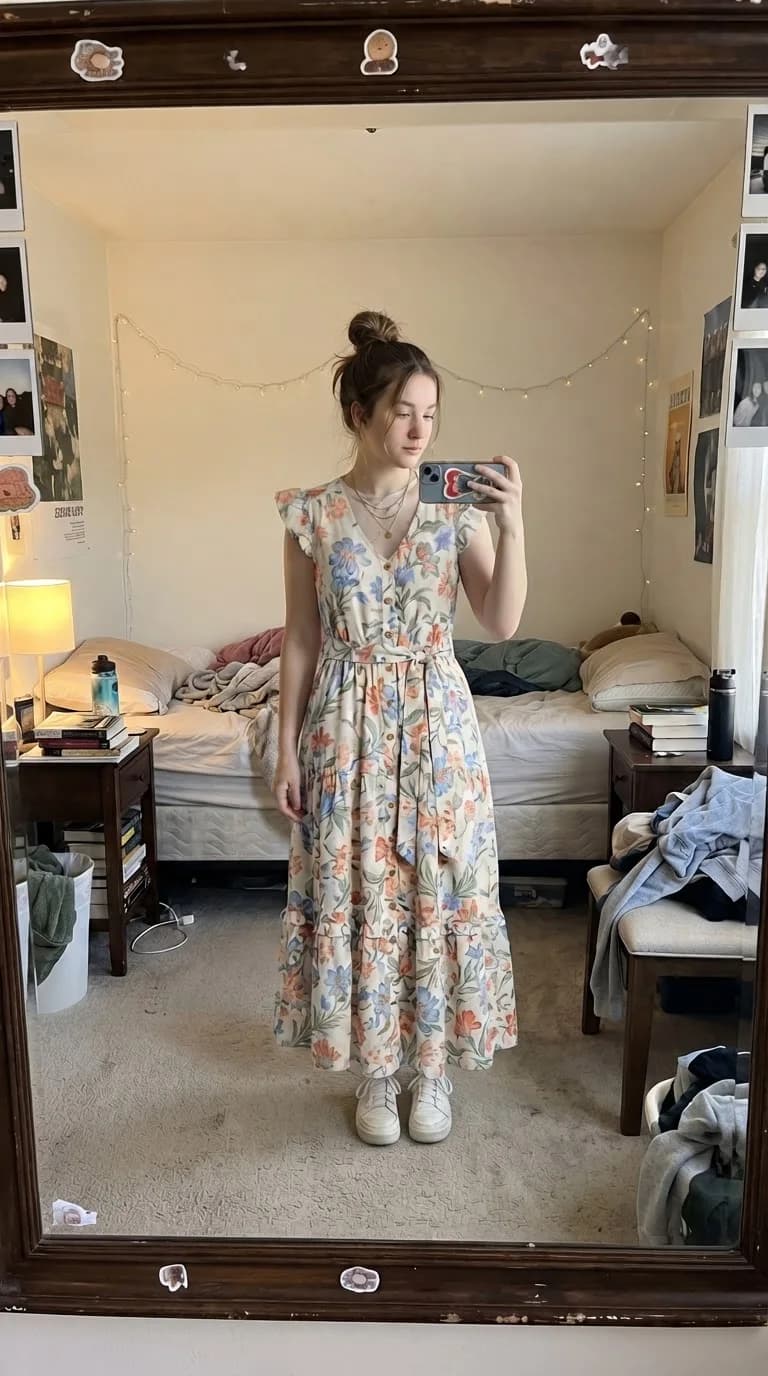
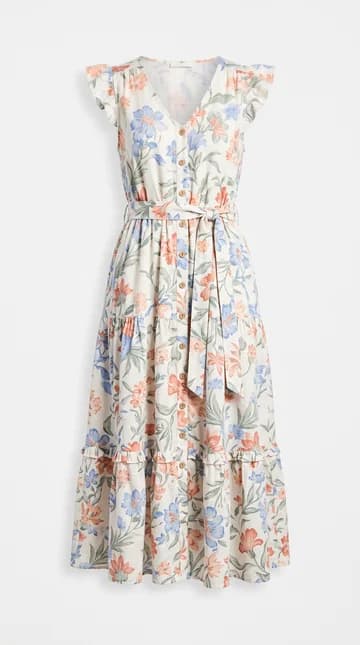
Floral dress — After
Floral dress
Try it for free1. The $38 Billion Return Crisis: The Reality of E-Commerce Fashion
Online shopping promised unprecedented convenience: millions of designer garments available at the tap of a screen, delivered directly to your doorstep. Yet beneath this glossy facade lies a staggering logistical crisis. In 2025 alone, global fashion e-commerce recorded over $38 billion in returned merchandise, with return rates for apparel hovering between 35% and 45%—nearly quadruple the return rate of brick-and-mortar stores.
The underlying driver of this crisis is not buyer remorse, but a profound sensory information gap. When shopping on a 2D screen, consumers cannot feel textile weight, assess stretch recovery, or evaluate how a three-dimensional pattern interacts with their unique skeletal posture and curvature.
Compounding the frustration is the environmental toll. Reverse logistics generate millions of metric tons of carbon emissions annually, and an estimated 25% of returned fashion items are discarded into landfills because repackaging and restocking exceeds the item's margin. Solving this problem requires shifting from speculative purchasing to predictive visual validation.
By understanding the cognitive traps and marketing illusions of digital retail, you can protect your hard-earned money and make every wardrobe investment intentional.
2. Mistake 1: Relying Solely on Generic Size Letters (S/M/L)
The most pervasive mistake online fashion shoppers commit is assuming that a size 'Large' in one brand correlates to a size 'Large' elsewhere. Fashion brands design garments around proprietary fit models—living human beings whose specific proportions serve as the base template for the entire brand.
A brand targeting youthful urban professionals may employ a fit model with narrow hips, broad athletic shoulders, and long limbs. Conversely, a luxury heritage label might base its patterns on a more mature, fuller-figured silhouette. When both brands produce an item labeled 'Size M', the actual bust and hip circumferences can deviate by more than 8 centimeters.
To make matters worse, international sizing conversions printed on product pages are frequently automated approximations that ignore pattern grading differences. A European size 40 is not a direct replica of an American size 8.
Smart consumers bypass letter sizes entirely, focusing instead on garment finished measurements (pit-to-pit chest width, shoulder breadth, and total back length) and visual neural simulation.
3. Mistake 2: Overlooking Fabric Composition and Elasticity Coefficients
Photographs make two vastly different textiles look identical. On a studio-lit product image, a pair of 100% rigid vintage cotton denim jeans appears indistinguishable from a cotton-poly blend containing 4% elastane. Yet on the body, their behavior belongs to different universes.
Rigid 100% cotton denim offers zero mechanical give. If your hip measurement is just 1 centimeter wider than the garment blueprint, the waistband will pinch violently, making sitting down uncomfortable. In contrast, an elastane blend stretches to accommodate your curves, molding comfortably to your hips throughout the day.
Similarly, synthetic polyester satin often lacks the breathability and fluid gravitational drape of silk or modal crepe, resulting in static cling and stiff, unnatural folds. Failing to scrutinize the fabric composition label on the product page is a direct ticket to return dissatisfaction.
Always check fiber percentages and examine whether the textile has natural mechanical stretch or requires exact anatomical matching.
- 100% Cotton / Linen: Zero stretch, requires 4-6cm wearing ease for comfortable movement.
- Cotton with 2-4% Spandex/Elastane: Flexible fit that hugs curves without pinching.
- Viscose / Rayon: High drape and softness, but prone to shrinking if laundered with heat.
- Wool blends with Cashmere: Natural thermal regulation and elastic recovery.
4. Mistake 3: Falling for Pinned Studio Samples and Model Posing Illusions
Commercial fashion photography is an art form designed to sell fantasy, not communicate technical reality. Showroom photographers and stylists employ an arsenal of behind-the-scenes tricks to make ill-fitting garments appear immaculate on professional models.
The most common device is the heavy-duty metal binder clip. Stylists clamp excess fabric behind the model's back, gathering loose cloth along the spine to create an artificial hourglass waist or sharp tapered chest. When you unpack that same dress or blazer, you are shocked to find a boxy, tent-like silhouette.
Furthermore, lookbook models frequently stand 178 to 183 centimeters tall (5'10" to 6'0"). A mid-calf midi dress on an agency model will fall to the ankles or drag along the floor on a woman of average height (164 cm), while a cropped jacket will hit at your hips rather than your natural waist.
Posing also hides fit flaws: placing hands inside jacket pockets pulls front panels tight, while angled leg stances mask crotch bunching in trousers.
5. How Virtual Try-On Revolutionizes the Purchasing Journey
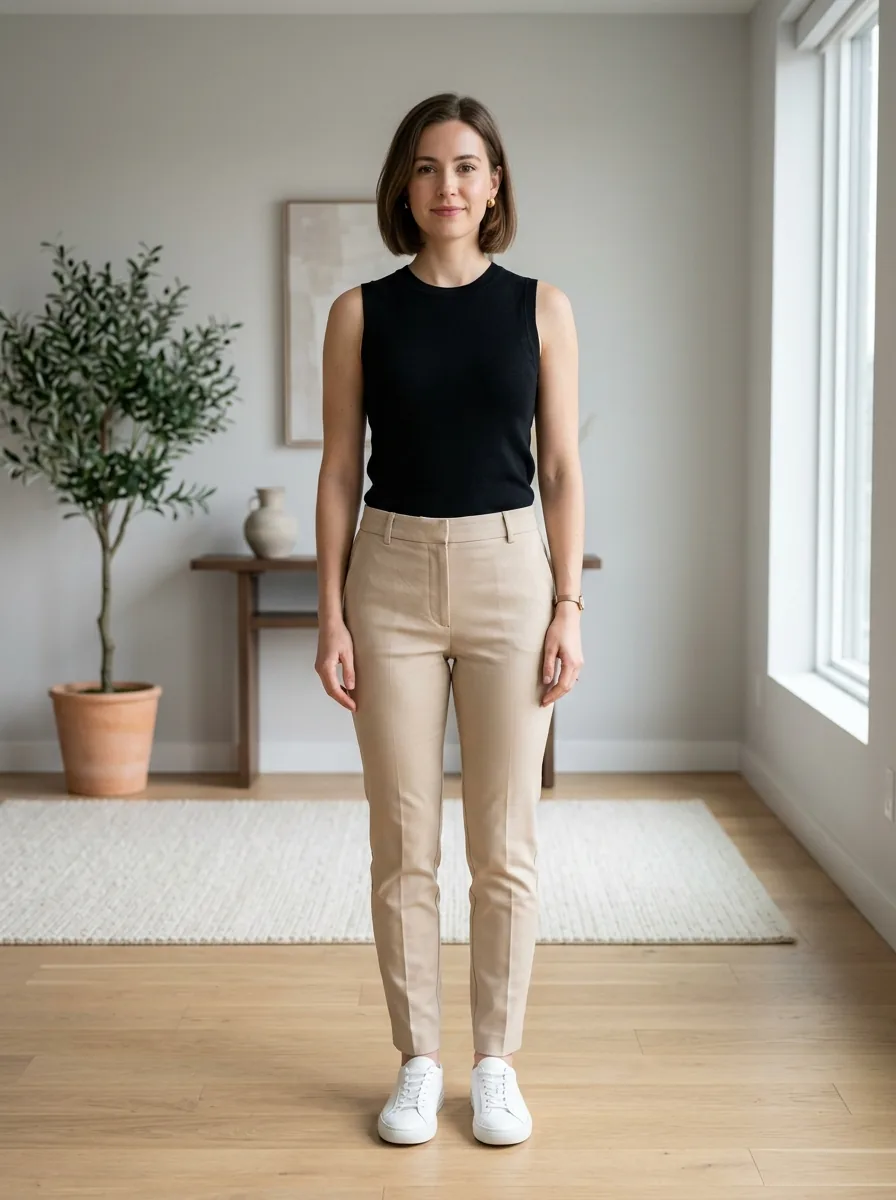
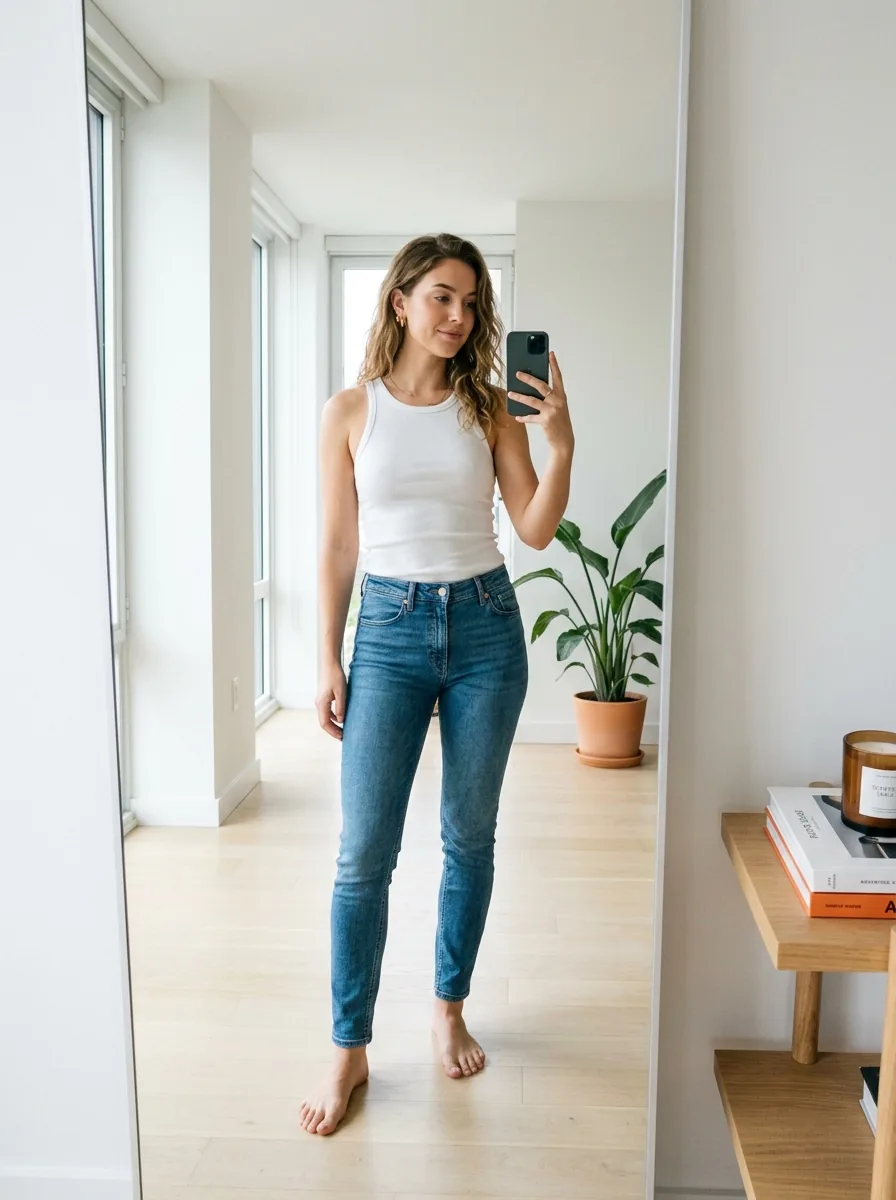
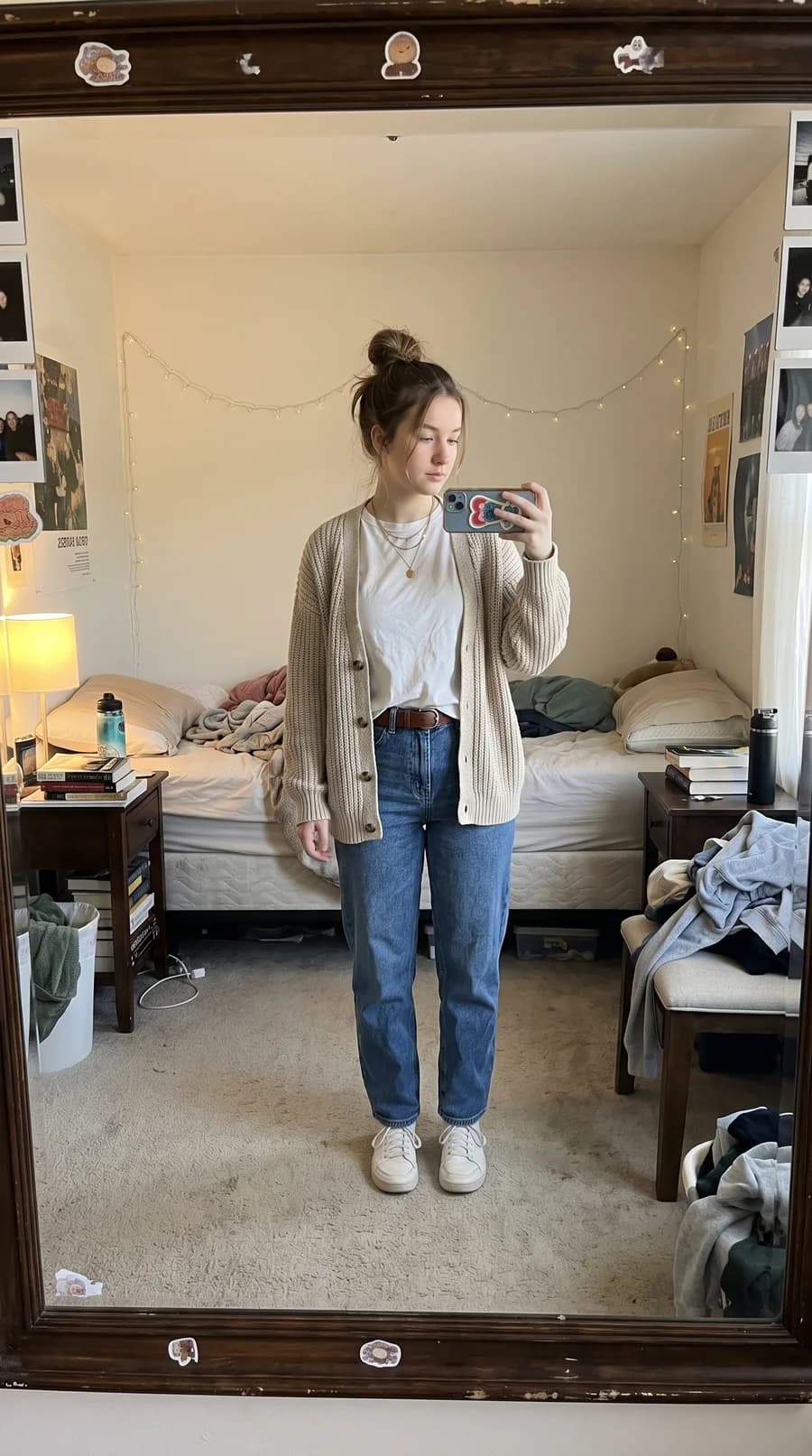
Use VirtuStyle AI to explore the appearance of shortlisted items on your own photo. Upload a person photo and a clear garment image, then compare the generated appearance with the original product.
Treat the result as an illustration of a possible look. The model may change construction details, patterns or proportions; it does not calculate verified body dimensions or simulate material physics.
Check the retailer’s measurements and fabric description separately. A generated image cannot establish comfort, support, warmth, stretch or how the item behaves while moving.
If a detail is unclear, try a clearer source image and compare again. Keep the original product page for checking measurements and return conditions before ordering.
Frequently asked questions
Why do clothes always look better on models than in real life?→
You can explore the appearance of shortlisted items as a visual preview. Generated details and colours can differ from the actual garment. This tool cannot verify measurements, tightness, support or comfort; check those with the seller.
Can virtual try-on show me if a dress will be too tight across the bust?→
You can explore the appearance of shortlisted items as a visual preview. Generated details and colours can differ from the actual garment. This tool cannot verify measurements, tightness, support or comfort; check those with the seller.
How can I avoid buying garments that shrink in the wash?→
Always check the care label on product listings. 100% natural fibers like linen, rayon, and unwashed cotton can shrink up to 5-8% if washed in hot water or tumble-dried.
Is virtual fitting accurate for plus-size or petite body shapes?→
You can explore the appearance of shortlisted items as a visual preview. Generated details and colours can differ from the actual garment. This tool cannot verify measurements, tightness, support or comfort; check those with the seller.
What to remember
7 Common Online Clothing Shopping Mistakes and How Virtual Fitting Solves Returns. Use the practical checks above to shortlist options, then verify size, materials and comfort with the seller. A virtual preview can help you compare appearance, but cannot guarantee fit or replace a physical fitting.